Ekspilot myśliwca walczy o władzę w Bułgarii. „Jego możliwości pozostają zagadką”
„`html
Bulgarian political landscape has been continuously shaken by crises and weak coalitions, making governance in this Balkan nation nearly impossible. With a population of 6.7 million, Bulgaria has experienced seven prime ministers since 2021, none of whom completed a full term. This weekend’s elections will be the eighth in five years.
The Dilemma of Potential Leadership
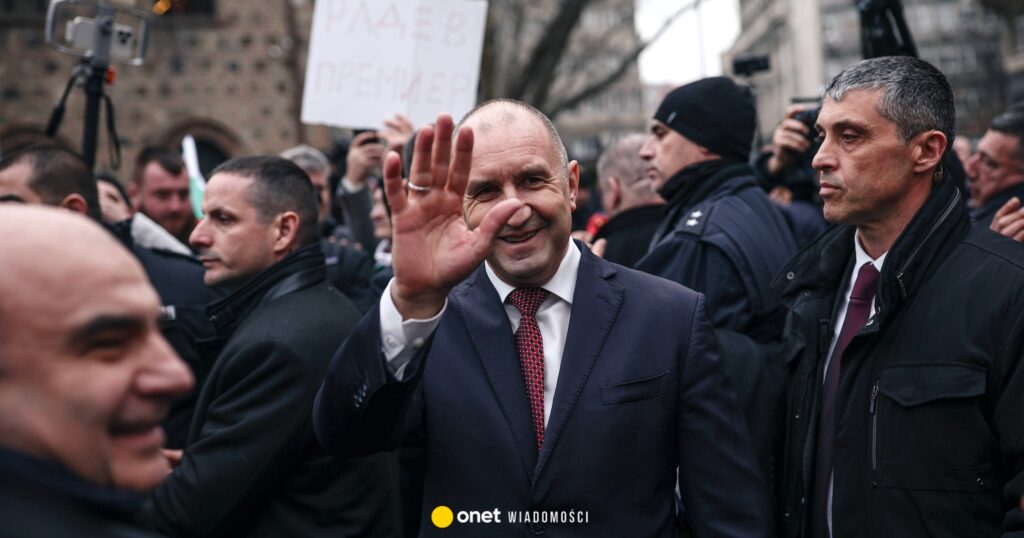
Former President, who served as the head of Bulgaria’s air forces and a MiG-29 pilot, might find it challenging to break this deadlock. His recently founded movement, Progressive Bulgaria, is expected to secure only 31% of votes, indicating that the same issues previous leaders faced in forming a stable government coalition may persist.
Political Ambiguity and European Concerns
His political agenda is unclear, raising concerns in Brussels. Radev has long aligned with Kremlin views on Ukraine and has suggested importing Russian oil. Despite promises to combat high-level corruption, critics highlight that Progressive Bulgaria garners support from parties with complex histories involving nationalism and corruption.
From President to Potential Prime Minister
Radev leveraged his impressive military aviation skills to build a political brand. Before running for the presidency in 2016, his airborne loop maneuvers were heavily promoted. A campaign video for this year’s parliamentary elections shows Radev in his MiG-29 cockpit, reflecting on a vertical takeoff.
A Metaphorical Battle
Upon assuming office in 2017, he leveraged his military background to enhance his image as an unwavering patriot untarnished by party politics. During a political storm in 2020 over oligarch influence, prosecutors raided presidential offices, bolstering his credibility as a fighter against state capture.
A Fight Against Corruption
Radev condemned corruption, demanding „gangsters” leave power. His anti-corruption campaign is central to this year’s elections, with a pledge to „overthrow the oligarchy,” a concept deeply embedded in Bulgaria’s social and economic fabric.
Facing Powerful Opponents
His primary political adversaries are former Prime Minister Boyko Borisov and Delian Peevski of the DPS-New Beginning party. Both deny accusations of being chief allies of an oligarchic „deep state.”
Despite longstanding speculation about a premiership run, Radev only disclosed his Progressive Bulgaria project in March. While not officially leading it, he is unmistakably the movement’s face, attracting a diverse group of politicians loyal to him or those who have switched allegiances.
Eclectic Support
Progressive Bulgaria has drawn an eclectic group of supporters. Polls indicate that it appeals to some backers of the ultranationalist pro-Russian Revival party, and other nationalist groups have also shown support.
The movement’s platform is vague, with Radev not clearly defining its political alignment. His economic policy has elements of both left and right-wing programs. Recently, he has avoided detailed interviews, opting only for appearances on the national public television and a controversial YouTube channel known for disseminating misinformation.
His strategy is to remain as ambiguous as possible, appealing to both left and right-wing voters, yet this approach may backfire once he assumes power, as critics argue that his leadership lacks principles and proposed solutions.
With subdued pro-Russian rhetoric, his views emerged in debates about Bulgaria’s need for Russian oil. The interim government’s March decision to sign a 10-year cooperation agreement with Ukraine was sharply criticized by Radev as „dragging us into war”.
The Complex Coalition Puzzle
Analysts note a predicted electoral success might not materialize, with polls suggesting less than the anticipated majority. Should Radev fail to secure dominance, natural partners in anti-corruption like the reformist „We Continue the Change” and Democratic Bulgaria coalition may not align with his pro-Russian stance.
Aligning with pro-Western parties could limit Radev’s ability to influence policy on Ukraine, with possible cooperation involving compromises towards Moscow.
Ultimately, there are deeper questions about Radev’s capacity to lead. Unlike the presidency, leading the largest party requires brokering agreements with other parties, a skillset not yet demonstrated by him.
Failure to form a government may diminish Radev’s perceived outsider status and hasten the erosion of his political advantage, a common pattern in Bulgarian politics where initial outsider appeal quickly fades when confronted with governance challenges.
„`